POLITITUDE – The media plays a vital role in connecting nations and fostering mutual understanding among people. Amid the rapid advancement of artificial intelligence (AI), big data, and digital technologies, media convergence has become a defining trend in global journalism and communication.
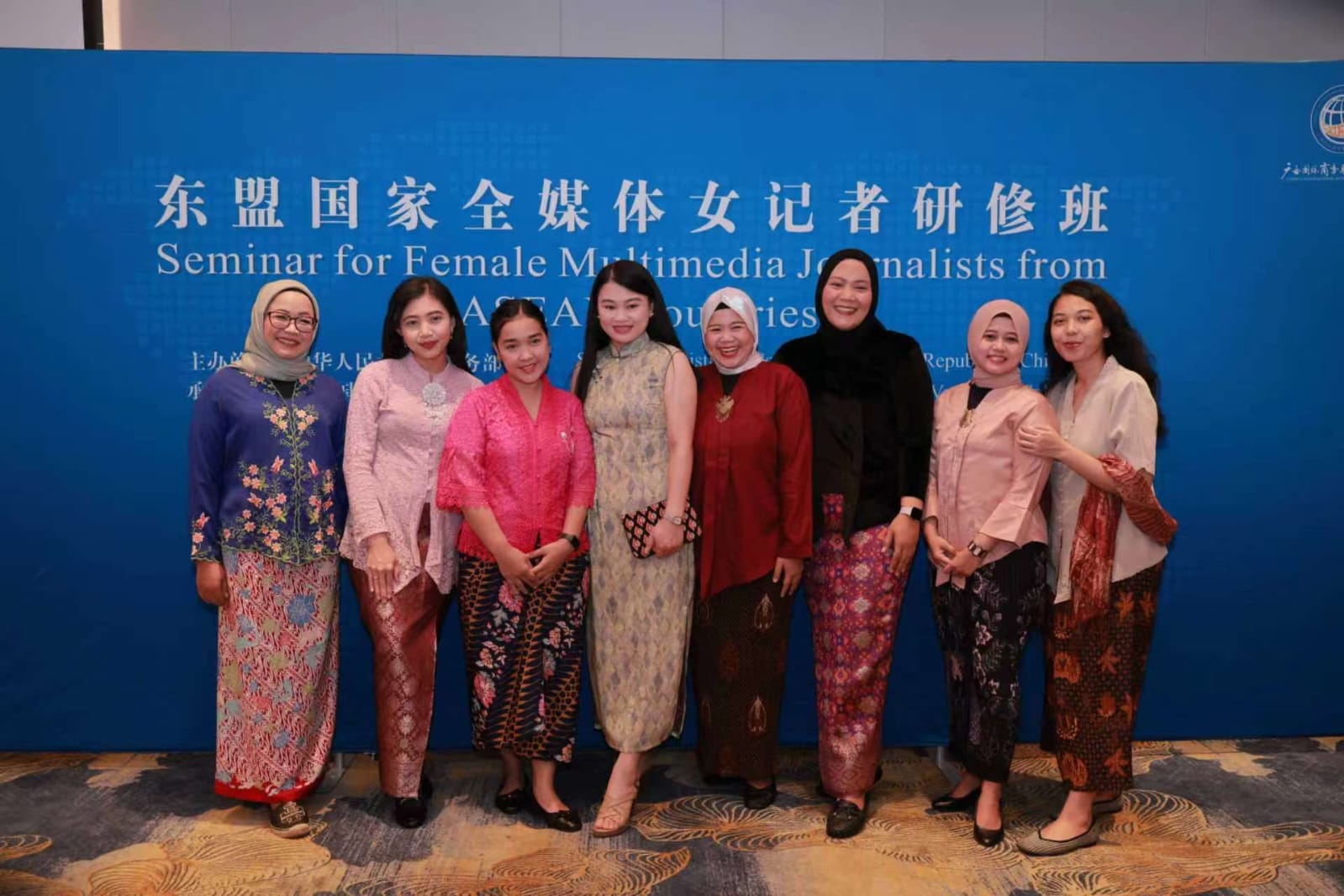
In response to these developments, the People’s Republic of China conducted the Seminar for Female Multimedia Journalists from ASEAN Countries organized by Guangxi International Business Vocational College from 8 to 21 July 2026. The two-week program brought together 27 participants, including government public relations officers, media practitioners, and journalists from Indonesia, Laos, and Myanmar.
Speaking at the closing ceremony, Tuesday (21/7), Zhao Diqiong, Vice President of Guangxi International Business Vocational College, highlighted the important role of women journalists in today’s media landscape. Female journalists working on the front lines of the media industry shoulder the important responsibility of delivering truthful information, promoting mutual understanding among civilizations, and strengthening friendship between peoples.
“We believe that through this seminar, you have not only enhanced your professional competence and digital communication skills, but also gained a deeper understanding of China’s development path, Chinese culture, and China’s experience in integrated media development, laying a solid foundation for broader international media cooperation in the future,” she said.
Among the participants were seven Government Public Relations Officers from Indonesian ministries and public institutions, representing the Secretariat General of the House of Regional Representative of the Republic of Indonesia (DPD RI), the Ministry of State Secretariat, the Ministry of Law, the Ministry of Administrative and Bureaucratic Reform (PANRB), the Jakarta Provincial Government, the Ministry for the Protection of Indonesian Migrant Workers, and the National Institute of Public Administration (LAN).
Throughout the 14-days seminar, participants explored integrated media development and international communication strategies while examining the latest trends in global media transformation. The program combined classroom sessions with field visits and exchange activities in Nanning, Guangxi Zhuang Autonomous Region, and Hangzhou, Zhejiang Province. Participants visited media organizations, universities, research institutions, and leading technology companies to gain practical insights into China’s media ecosystem.
Annisa, a delegate from Indonesia’s Ministry of State Secretariat, said the program had broadened her perspective on communication and media development.
“Every lecture and every visit broadened our perspectives and inspired us to think differently about the future of communication. As communicators, we spend our careers telling stories for others. During these two weeks, we also created a story of our own,” she said.
Another participant, Intan from the Secretariat General of the House of Regional Representative (DPD RI), shared that the seminar offered not only valuable lessons on media technology and integrated media practices, but also meaningful exposure to Chinese culture, particularly in the Guangxi Zhuang Autonomous Region.
“We were introduced not only to advances in media technology and innovative practices in integrated media development, but also to the richness of traditional Chinese culture,” she said.
The seminar is expected to strengthen the capacity of women journalists and government communicators to adapt to the rapidly evolving digital media landscape. Beyond enhancing professional competencies, the program also serves as a platform to foster stronger media cooperation and people-to-people exchanges between China and ASEAN countries.***